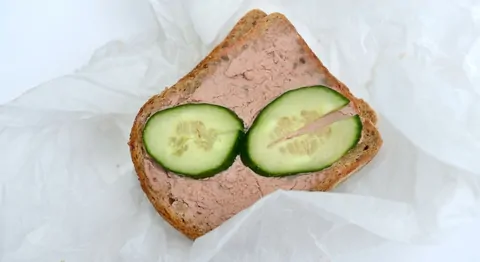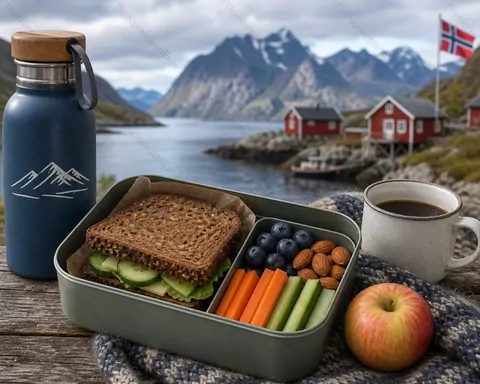
Are Norwegians the only ones who eat dry bread at 11:30 a.m.?
After I wrote about our beloved, somewhat boring lunchbox last time, I had a thought: “Do they do the same thing in Sweden and Denmark?” The answer is… almost, but not quite. We Norwegians have this unique tradition of serving a stack of four slices of bread, wrapped in wax paper that always curls up.
Let’s take a little Nordic tour (with a few global detours for fun).
Denmark, Sweden, and Finland
- In Denmark, they have “madpakke,” which is pretty similar to our own system. Rye bread is often topped with cheese, liver pâté, ham, or pickles. The Danes are a bit better at layering things on top of each other and calling it “smørrebrød” when it’s supposed to be festive. But what about in everyday life? It’s just a simple “madpakke” in a box, and sometimes there’s a little surprise like a carrot or an apple.
- Sweden is where things are at their most different. In schools and a lot of workplaces, it’s pretty common to have a hot lunch. Kids often get hot food for free or for a cheap price. People who bring a packed lunch often call it a “lunchlåda” or just a “smörgås,” but it’s not as big of a deal as it is here. It seems like Swedes think, “Why eat cold food when you can have hot food?” We Norwegians usually say, “It’s tradition, and it’s cheap.”
- Finland has “eväs,” or “eväspussi”—a packed lunch that often contains rye bread, cheese, ham, or fish. But Finnish schools also serve hot lunch to all kids. So the packed lunch is more for adults or days out.
Iceland and other countries outside of the Nordic region
In Iceland, there’s more variety. In small villages, it’s usually homemade and practical, but schools often serve hot meals. Icelanders are all about working together to figure things out.
Outside the Nordic region, things get even more exotic for us:
- In the UK, it’s usually just a sandwich in a bag, often with chips and a piece of chocolate. It’s more of a “grab and go” kind of thing.
- In the U.S., it varies a lot: Some people bring peanut butter and jelly, while others bring leftovers from the night before in a fancy lunchbox.
- In Japan, it’s called “bento,” which is like a mini culinary masterpiece made with rice, fish, veggies, and fruit, all packed neatly to look like a meal from a cooking show.
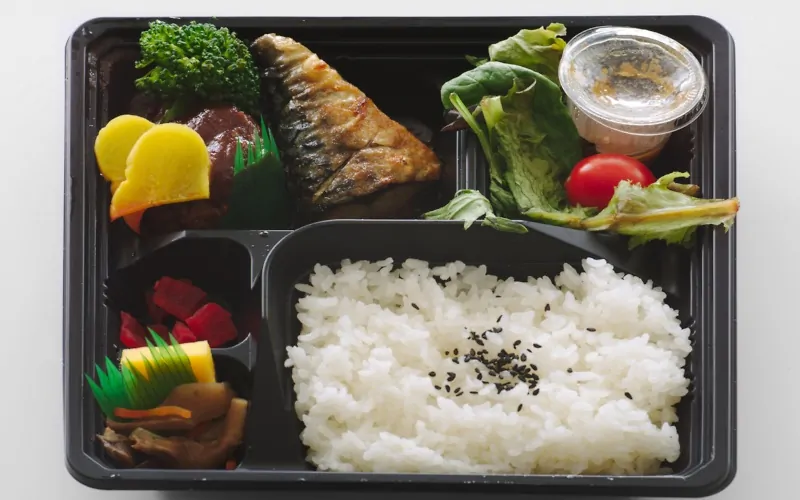
(Bento Box)
The best part about looking at other countries is that we realize just how unique our own traditions are. A packed lunch isn’t just about eating—it’s about being thrifty, treating everyone equally, and enjoying a little bit of home with you wherever you go. Sure, other countries might have fancier or warmer meals, but not many have the same “everyone does it the same” vibe that we’ve got going on.
Germany
In Germany, it’s almost as serious as it is here, but with a slightly more “grown-up” twist. There, it’s called “Brotzeit” or “Pausenbrot,” and it’s often rye bread with sausage, cheese, and cucumber—usually packed in a fancy box that looks like it costs more than my entire lunch. The Germans do have one rule, though: it has to be proper. No half-hearted slices here, no. You almost feel guilty if you just throw in a dry crispbread and call it lunch.
France
France, on the other hand… oh, they just laugh right in our faces. Why pack a lunch when you can pop into a “boulangerie” and buy a fresh baguette with cheese and ham? Or even better: enjoy a little sit-down lunch with a salad and a glass of wine (yes, even on a regular Tuesday). For a Norwegian standing there eating a cold sandwich in the February rain, it almost feels like cheating. They’re right, of course, but still.
Italy
Italy takes it all to a whole new level with “panino” or leftovers from yesterday’s pasta. They wrap it in foil and eat it with pride. I’ve heard that Italian kids bring small thermoses of hot pasta to school. We give them a semi-dry slice of brown cheese and hope they don’t trade it for a chocolate bar.
India
In India, the packed lunch (or “tiffin”) is a whole other story. There, you often get multiple layers of rice, vegetables, and chapati, carried in practical metal boxes that keep the food warm for hours. It’s colorful, spicy, and pungent—enough to make a Norwegian lunchbox smell like an entire spice shop in the office. Respect.
Australia and New Zealand
In Australia and New Zealand, they blend British sandwich tradition with a healthy Aussie vibe. Avocado, eggs, chicken, and lots of fruit. They eat outside in the sun, often straight from a small cooler while sitting on a bench. We Norwegians tend to sit in a dark cafeteria and chew in silence while staring out at the snow and thinking about the summer that was here in 2018.
And then there are those countries where packed lunches are almost unheard of. In many South American countries, people eat a proper meal in the middle of the day—often with family or colleagues. A siesta mentality with real food, not just bread with toppings. Suddenly, our proud packed-lunch tradition feels like a bit of Protestant self-flagellation.
Still, I sit here and smile a little. Because even though the Japanese create “bento” art and the French enjoy baguettes, we have something most others lack: a democratic, somewhat mundane, and incredibly Norwegian sense of community. Everyone does it. Everyone has the same thing. And it’s actually quite cozy—even when the bread is dry and the cucumber has gotten a little stale.
Maybe we aren’t the only ones in the world who eat cold food at 11:30 a.m. But we’re definitely among the most consistent. And that, dear friends, is well worth a small bowl of milk.
So, what’s your go-to food when you’re on the road? Have you tried a “madpakke” in Denmark or a “bento” in Japan? Or are you someone who always brings hot soup in a thermos and ruins the whole packed-lunch culture?
Enjoy, and bon appétit!
Cross-Cultural