Welcome to Norway, where you can pretty much go wherever you want, sleep wherever you want, and pick berries wherever you want—no need to ask anyone for permission. Welcome to “Allemannsretten,” the brilliant, unwritten (but legally protected) right that lets Norwegians feel like free people in their own natural surroundings.
You could put it this way, with a little playful humor: While other countries have “Private Property – Keep Out” signs everywhere, in Norway we have signs that say “Welcome – help yourself, but clean up after yourself.”
So, what exactly is the “Allemannsretten” (Right of Public Access)?
“Allemannsretten” is the idea that everyone—both Norwegians and tourists can roam around the countryside as they please. This means you can:
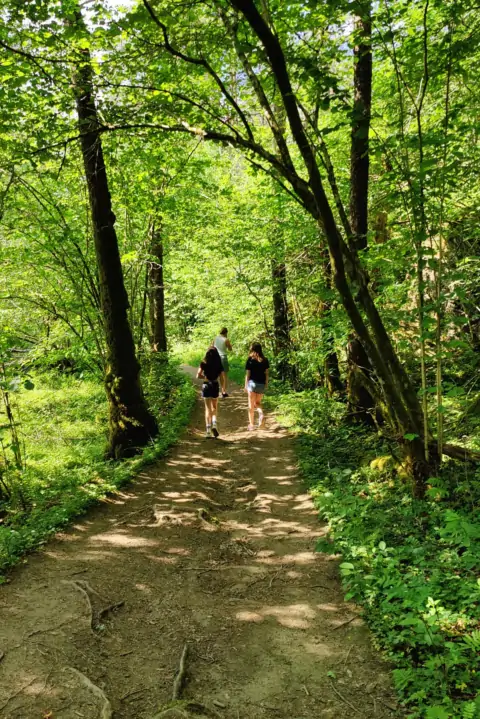
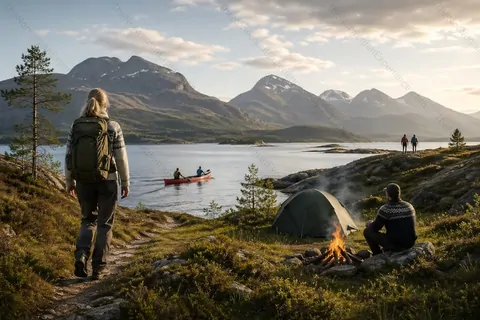
- You can walk, bike, ride a horse, or paddle through forests, mountains, moors, and along the coast.
- You can camp here for a night or two, as long as you’re at least 150 meters from the next house.
- Go ahead and pick some wild berries, mushrooms, and flowers (as long as they aren’t protected).
- You can swim, row, and fish with a handline in the sea and lakes.
- You can enjoy the peace and quiet for free.
This isn’t a “Wild West” rule. There are clear boundaries: Please don’t damage nature, disturb wildlife, leave trash behind, or come too close to private homes and cabins. To sum it up, just use your head and be a good guest to the environment.
Why do we actually have this right?
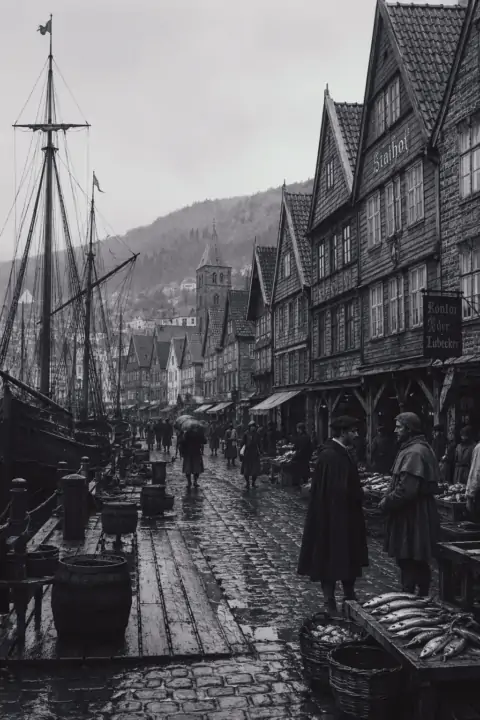
“Allemannsretten” has been around for as long as the mountains themselves. It goes way back to the Viking Age and peasant society, when people had to be able to move around to find pasture, firewood, and food. It was finally made legal in 1957 with the “Outdoor Recreation Act.”
In a country with tons of nature and not many people, it just made sense. Why should you ask the owner of an entire mountainside for permission to go for a walk there? Norwegians thought: “No, let’s just say that everyone can be there—as long as they behave themselves.”
It’s actually pretty revolutionary when you think about it. In a lot of other places, you’d probably get kicked out with dogs and lawyers if you set up a tent on someone else’s land.
So, what does this mean in practice?
For a lot of people who come here, the “Allemannsretten” is both freeing and a little scary.
It’s a great feeling to be able to camp on a beautiful island without having to pay for a campsite.
It can be a little intimidating because you wonder: “Is this really allowed? Is someone going to come and yell at me now?”
The answer is yes, it’s allowed—and no, no one will come and yell at you (unless you pitch your tent in someone’s yard or build a fire in dry heather in the middle of July).
Here are some practical rules of thumb:- Stay at least 150 meters away from houses and cabins where people live.
- You can camp in a tent for up to two nights in the same spot without asking, but after that, you should move on.
- You’re allowed to have campfires in open country, but you can’t if there’s a risk of forest fire. (Always check the local regulations, though.)
- Take all your trash with you—and feel free to pick up a little extra if you see anything left behind.
“Allemannsretten” and “Friluftsliv” (outdoor life) are a perfect match.
Without the “Allemannsretten,” “friluftsliv” wouldn’t be the same. This right lets you:- You can hike Besseggen without having to pay any tolls.
- You can paddle in Nærøyfjorden without buying a permit.
- Sleep under the open sky on Hardangervidda and wake up to silence.
It makes nature feel like it’s for everyone, not just the rich or those who own a cabin.
“Allemannsretten” is the reason Norwegians can say “I’m just going out for a walk” and actually mean it—without having to book or pay for the experience.
This is how it is in the other Nordic countries.
Norway isn’t the only one—we’ve got some pretty similar neighbors:
- Sweden (“Allemansrätten”): It’s almost identical to ours. It’s even in the constitution and considered part of Sweden’s “kulturkanon.” You can camp for a bit, look for stuff to eat, and roam around as you please, but you’ve still got to respect the land. The Swedes are perhaps even a bit more unwritten in style, but just as free.
- Finland (“Jokamiehenoikeus”): Also very similar. You can hike, camp, and forage pretty much anywhere, as long as you don’t cause any damage. Finland places slightly more emphasis on the idea that “what’s not forbidden is permitted.”
- Iceland: It’s a bit more restricted than the others. You’re free to roam as you please, but remember that camping on private land usually requires permission. There are also stricter rules in place to protect the fragile natural environment.
- Denmark: Here, things are a bit more restricted. When there are more people in one area, there are fewer rights. You can’t usually wild camp, and you have to stick to designated areas or campgrounds more often.
The other Nordic countries are like siblings sharing resources, but Norway and Sweden are the ones who share the most.
What’s the situation in the rest of Europe and the world?
Here, the differences are pretty clear—and a bit funny:
- Scotland: It’s got its own “Right to Roam” (that’s from the “Land Reform Act of 2003”). They were inspired by the Nordic countries. You can hike and camp responsibly on much of the land, but it’s not quite as free as it is here. Even so, Scotland is the Nordic countries in Europe when it comes to freedom.
- England and Wales: It’s a lot stricter. A lot of the land is private, and you can’t really get to the “open access land” very easily. Just a heads-up: it’s usually illegal to wild camp without permission, and you might even get chased away.
- In countries like Germany, Austria, and Switzerland, got the right of way, but camping and foraging are often off-limits or require a permit. The nature is gorgeous, but you feel more like a guest than a co-owner.
- In the US, the “this is my land” mentality is super strong. Private property is sacred, and you might quickly be met with “No trespassing” signs, dogs, or worse. Wild camping is usually against the law outside of public areas like national parks (and even there, the rules are strict). Freedom? Yeah, but not exactly where you want to sleep in the woods.
- Other places: In a lot of countries, especially in Southern Europe, access to nature is pretty much limited to public parks or paid areas. The Baltic states have some things in common with the Nordic countries, but other than that, there aren’t a lot of truly free countries out there.
To sum it up, the Nordic countries (particularly Norway, Sweden, and Finland) have some of the most liberal rules in the world. We’re in a league of our own.
At last, remember to be a good guest.
“Allemannsretten” is a gift, but it requires that we all take care of it. If we damage nature, leave trash behind, or show a lack of respect, this right could be restricted. This has already happened in some popular areas.
So, the next time you’re out hiking, paddling, or setting up your tent by a lake, remember these tips. Take a moment to be grateful. You’re enjoying a level of freedom that’s pretty rare in most countries.
Use it. Take care of it. And don’t forget to smile a little as you pack up your tent and think, “This would never have been possible back home.”
Have a good trip, enjoy your “Matpakke” (packed lunch), and remember: It’s not just a rule; it’s good Norwegian etiquette with a playful side.
Life In Norway Cross-Cultural