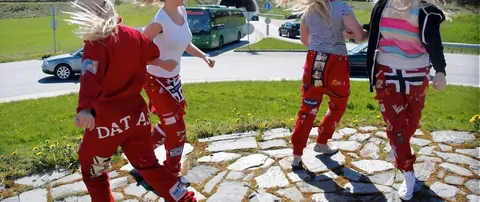
Imagine this: It’s early May, and in the middle of an otherwise quiet Norwegian town, an army of teenagers suddenly appears, dressed in bright red and blue jumpsuits that look like they’ve spent three weeks at a cross between a festival, a survival camp, and a wild party.
The bass thumps, laughter echoes, and the air is filled with a mix of energy, sweat, and pure youthful madness. Welcome to Russetiden—Norway’s loudest, most colorful, and frankly insane way to say goodbye to high school.
I’m from Bergen with roots in the American Midwest, and the father of one of these young people. I’ve learned to love the “Bunad”, the traditional costume on May 17th and the endless talk about the weather that Norwegians use as an opening to everything. But Russetiden? It still makes me stop in my tracks: “You guys are totally unique up here.” And after a few years, I’ve gone from being shocked to becoming genuinely enthusiastic about the whole thing.
A youth-driven national celebration
Russetiden is the celebration for high school seniors, most of whom are 18–19 years old. It starts in late April and builds up to a massive climax on Norway’s National Day, May 17. Around 42,000 young people participate each year, and it is the young people themselves who run the entire show, while the schools stay in the background. This is true youthful determination: they organize buses, parties, revues, merchandise, and massive volunteer efforts – and have often saved up money for several years in advance.
The tradition has roots in 19th-century European student customs, but the modern red-cap version began in Oslo in 1905. From being an elite affair for boys heading to university, it is today a broad popular movement. Red-caps and blue-caps still maintain some color distinctions, but everyone participates. Democratic, loud, and completely run by the young people.
Life in overalls – and the string that tells it all
The first step in the russ celebration is to swap out most everyday clothes for a full-body jumpsuit in bright red or blue, often with vulgar messages written directly on it with a marker. Ideally, it shouldn’t be washed for several weeks. After ten to fourteen days, it has developed its very own scent and patina – raw, unpretentious, and just the right amount of gross.
The Graduation Knots
A string hangs from the cap where you tie graduation knots – small trophies for challenges you’ve completed. Many are cozy and lighthearted, such as – eating breakfast in the middle of a roundabout, giving a rose to a stranger, singing loudly in the cafeteria, or sleeping outside in a sleeping bag. Others are wilder and more physical.
Examples of common russeknuter:- Pajamas: Wear pajamas for an entire school day.
- Tape: Being taped together with a fellow student during a double period.
- Under the desk: Sitting under the desk for an entire class period.
- Sodacap: Staying sober throughout the entire graduation period or at specific events
- Bathing challenge: Taking the first outdoor swim of the year before May 1st.
And then there are the “adult” challenges—the ones that make even a seasoned foreigner like me raise an eyebrow while smiling (a little cautiously). This includes various drinking challenges (often done with soda to be inclusive), skinny-dipping, or the more sexual variations like kissing strangers, having intimate moments in special places, or other challenges that require both courage and a good dose of shamelessness.
- Nude swimming: Swim naked outdoors with at least two other graduates.
- Run naked: Run naked across a local bridge or a well-known square.
- Cone: Have safe sex outdoors (in the woods).
- Gold cone: Have safe sex in a tree.
- White champagne cork: Have safe sex with the graduation president.
The lists are updated regularly following discussion; consent is strongly emphasized, and many graduates consciously opt out of the most outrageous items. Nevertheless, they are part of the tradition—honest, unvarnished, and proof that this is a celebration where you’re allowed to be young and a little crazy one last time before life begins in earnest.
The Graduation Buses – A Rolling Party and True Community
For many, the heart of graduation season is the buses. Twenty to thirty friends get together—often with a little financial help from parents—and transform an ordinary bus into a rolling nightclub with a sound system, light show, bar, and sleeping quarters. Some cost several hundred thousand kroner. They drive around the country to gatherings, play Russ songs with questionable lyrics, and fill the roads with bass and laughter. Those without a bus still get to experience the parties and local events. It’s not just a party—it’s a vibrant, mobile community.
May 17th – the grand climax
No day showcases Norwegian identity better than National Day during the russ period. After the children’s parade come the russ parades: a procession of tired but proud young people in overalls. Many haven’t slept in the last 24 hours, but they show up anyway. Traditional folk costumes and russ outfits side by side. It’s national romanticism, freedom, and pure youthful energy all in one image.
Russetid versus “American Prom”
American friends often ask me: Isn’t this just your prom? The answer is a resounding no. Prom is one glittering evening of glamorous dresses, tuxedos, limousines, and a polished “theme.” Everything is structured, supervised by adults, and focused on looking perfect.
Russetiden is a three-week-long celebration without pretense. No limousine – just a bus with 25 friends.
Prom is about dressing up. Russetiden is about dressing down into a shared uniform and celebrating that you’re still young. Prom wins on glitz. Russetiden wins on endurance, honesty, and pure, collective madness.
A bit about our Nordic neighbors
Although we share a lot of history with our neighbors, their celebrations often pale in comparison to the Norwegian Russ celebrations.
- In Denmark, they celebrate “studenterkørsel.” Instead of expensive buses rolling for weeks on end, they rent an open-top truck decorated with birch twigs for a single day. They drive from parent to parent, drink a beer or a glass of water at each stop, and jump into the harbor if they’ve received top grades. It’s charming and summery, but it lacks the Norwegian sense of a three-week-long siege of society.
- In Sweden, “Studenten” is more of a white-clad, glamorous affair. They wear white dresses and suits, and the iconic white student caps reminiscent of captain’s hats. But the party is over almost before it has begun. Swedes often view the Norwegian russ period with a mix of fascination and horror; for them, the celebration marks the transition to adulthood, while the Norwegian russ seem determined to be children one very last time.
Why Norway Stands Out
What truly makes the Norwegian celebration unique in the Nordic region is its duration and the collective uniformity of the russ outfit. While the Danes and Swedes celebrate after exams are over, Norwegian russ begin the party while their books are still on their desks. Nowhere else in the Nordic region will you see young people walking around for three weeks in the same, dirty outfit. Where our neighbors opt for the festive and summery, Norwegian youth choose the enduring and cult-like. It’s less of a “summer party” and more of a “Viking raid in red cotton.”
What Lies Beneath the Noise
Amid all the laughter and noise, there is a genuine sense of melancholy. This is a farewell to childhood and friends known since elementary school. Next fall, the group will split up – some will move to Oslo, some will stay in Bergen, and some will head out into the world. The russ period becomes a final, intense celebration of what has been.
I admire the trust Norway places in its young people. They get to organize their own chaos, and most handle it with surprisingly good judgment, even though it takes place in the middle of exam preparation. Of course, things get out of hand from time to time, but most celebrate hard without ruining it for others.
As half-American, I see the contrast clearly: In the U.S., it’s often about individual glory and the polished image. Here, it’s about celebrating together – loudly, colorfully, and a little messy.
A tradition worth loving
Russetiden is expensive, exhausting, and not for everyone. Some choose to celebrate quietly. That’s perfectly fine. But for those who dive right in, the memories will stay with them for the rest of their lives.
It’s refreshingly honest. Young people are young people everywhere, but here they’re allowed to celebrate it properly – without a filter.
The “Russetid” Cheat Sheet (Small Glossary)
- Russ: A graduating high school student (the protagonist of the chaos).
- Russedress: The iconic red or blue overall/jumpsuit worn for three weeks straight.
- Russeknuter: “Russe-knots.” Challenges or dares that earn you a trophy (knot) in your cap string.
- Russebuss: A literal nightclub on wheels. A bus customized with professional sound systems and light shows.
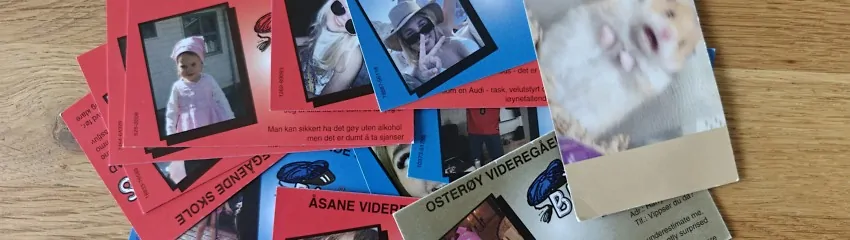
- Russekort: Personal “business cards” with funny quotes and photos that kids collect.
- Dugnad: The Norwegian concept of collective volunteer work (how they fund the whole thing!).
- 17. mai: Norway’s National Day and the grand finale of the celebration.
So if you’re in Norway in May: Listen for thumping bass and keep an eye out for the red and blue figures. If you’re invited to a Russ gathering, say yes. Bring earplugs, a good mood, and a big water bottle. You’re going to need it.
Cheers to the Russ! Nothing says springtime like the sound of Russ buses and life in the streets. Enjoy every moment, take care of each other, and make this a time you’ll never forget. This is your spring!
Life In Norway Cross-Cultural