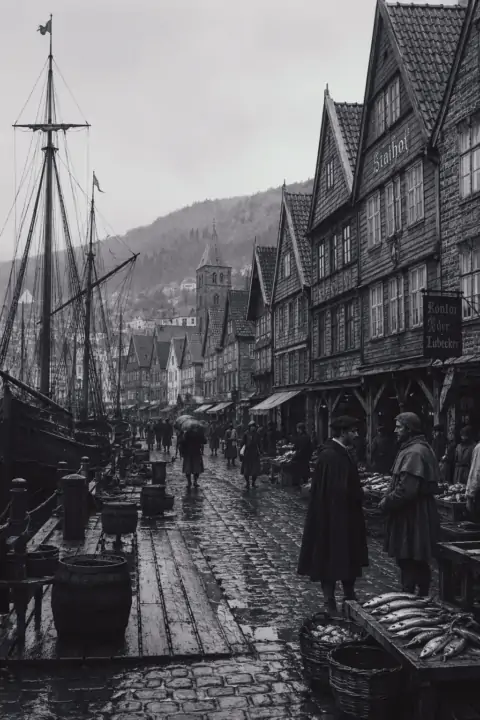
AI-generated illustration visualizing the Hanseatic League in Bergen.
A Hanseatic was a German merchant or sailor who belonged to the powerful Hanseatic League during the Middle Ages and early modern period. These merchants dominated Northern European shipping and established large, self-governing trading posts in cities such as Bergen.
When German lads ruled Northern Europe with dried fish and clever ideas
Imagine an entire trading empire without a king, without a standing army, and without a single central leader. Just a group of enterprising North German merchants who decided they would own half the North Sea and the Baltic Sea. And you know what? They succeeded for several hundred years.
I’ve dug a little deeper into this, and as usual, I ended up talking to some of the older residents of Bergen who’ve heard the stories from their great-grandparents. “Those Germans,” said an elderly man with a twinkle in his eye when I met him down at Bryggen, “they weren’t exactly popular, but they knew how to make money. And they wiped out all the competition.”
A network built on trust – and a little fear
The Hanseatic League (or the Hanse) began as a loose alliance between cities such as Lübeck, Hamburg, and Bremen around the 13th century. They didn’t call themselves an empire, but that’s exactly what it became. At its peak, up to 200 cities were members, and they controlled trade from Novgorod in Russia to London and Bruges.
The four major trading posts were the heart of the operation:- Novgorod: Furs, wax, and honey – think luxury goods for Europe’s wealthy.
- Bruges: Spices, wine, and fine fabrics from southern Europe and the Mediterranean trade routes.
- London (Steelyard): English wool, which was essential for the booming European textile industry.
- Bergen: Dried fish. Yes, exactly. The holy fish that Catholics ate during Lent. It was literally gold for the Hanseatics.
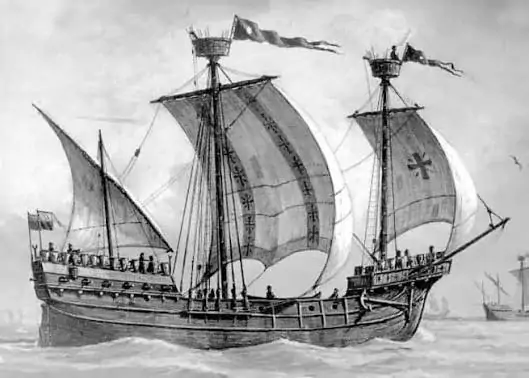
They sailed in sturdy cogs, often in large convoys to keep pirates at bay. And here’s something special. Many of the boys who worked at the offices were young, barely 13–14 years old when they arrived here from Germany. They lived crammed together in these large, dark wooden barracks at Bryggen, under strict rules.
No women, lots of discipline, and hard work. A bit like a mix of a military camp and a boarding school, only with more of a fishy smell.
“My grandfather always said it smelled more like money than fish down here,” the older man laughed. “But they kept at it for generations. Smart, those Germans.”
The Trade That Bound Europe Together – With a Bit of Fraud
They traded goods like few others. Grain from the Baltic Sea for dried fish from Norway. Salt from Germany for timber from the east. Textiles from Flanders for furs from Russia.
It was a highly efficient trading network long before anyone had invented the word “globalization.”
But it wasn’t all idyllic. The Hanseatics could be ruthless.
They pressured kings for privileges, closed ports if they didn’t get their way, and had their own courts in their offices. In Bergen, they controlled almost everything after the Black Death in the 1300s.
Local merchants complained, but what could they do? The Germans had the ships, the network, and the capital.
Yet there was something genuinely human about it all. These guys were far from home, young, and ambitious. They wrote letters home, drank beer (lots of beer), and built a system based on trust between cities that were actually competitors.
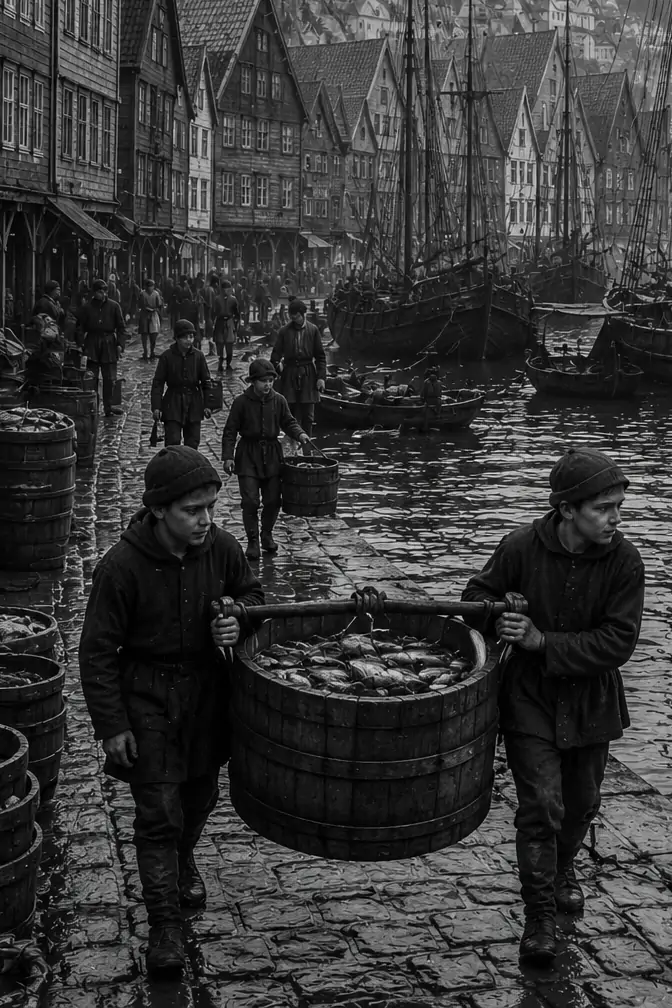
AI-generated illustration visualizing the Hanseatic League in Bergen.
It’s almost touching – in a slightly cynical way.
From Empire to Cultural Heritage
Starting in the 1500s, things began to change. Nation-states emerged, new sea routes to Asia took over, and the Reformation meant people ate less dried fish.
The office in Bergen lasted the longest – all the way until 1754. That was the end of German rule.
Today, Bryggen stands as the most vivid testament to that era. When you walk there and see the crooked houses, you can almost hear the echo of cog ships docking, loaded with fish, while young German merchants do their best not to long for home and their mothers.
The older man concluded our conversation with a moment of reflection. “They were clever, those guys. But luckily, we got rid of them in the end. Otherwise, we might be speaking German here today!”
And that’s perhaps the best part of the story of the Hanseatics: It shows how much can be achieved when ordinary people – well, merchants, in this case – decide to work together. With a little cunning, a little luck, and plenty of dried fish.
Life In Norway Cross-Cultural