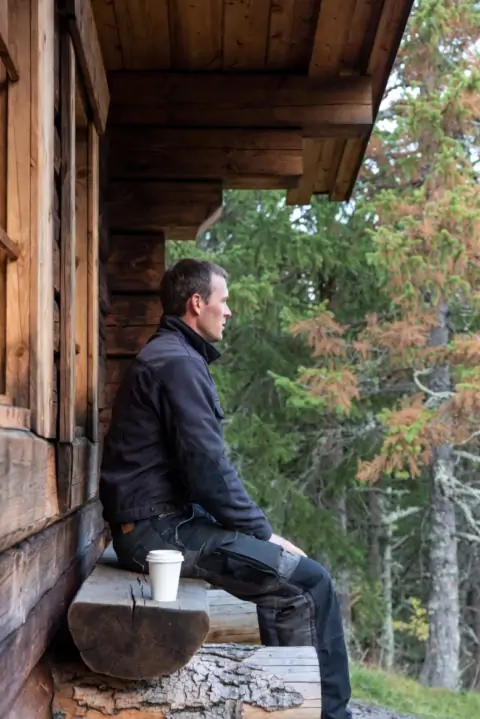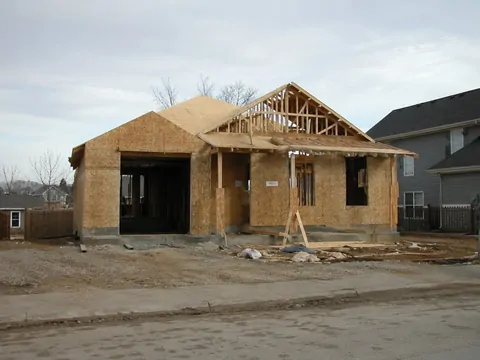
I’ve swung a hammer both in the sprawling suburbs of America and on the steep Norwegian hillsides. As a carpenter, I’ve built everything from large single-family homes in Texas to cozy cabins up here. And let me say this right off the bat: it’s not just the weather that’s different.
When I started as a carpenter in Norway, I had to laugh a little. Everything was… so damn fussy. In the U.S., we could put up a wall in a morning with 2×6 lumber, nail on OSB panels, and call it “structurally complete.” Here? First, there had to be a vapor barrier, then a wind barrier, then a bit more insulation than I thought was physically possible to cram into a wall, and finally a discussion about what type of plywood we should use.
Choice of Materials

What surprised me the most was the choice of materials. In the U.S., we work a lot with dimensional lumber like 2×4s and 2×6s in Southern Yellow Pine or Douglas Fir—fast, strong, and easy to get. OSB panels are standard for wall and ceiling sheathing, and most of it is optimized for speed and volume. Here in Norway, it’s almost a science. Spruce and pine dominate, but they make a careful distinction between quality, heartwood versus sapwood, and whether it should be pressure-treated or treated with modern, eco-friendly agents.
I remember the first time someone explained to me why we use Siberian larch on certain facades – “because it withstands the weather better than almost anything else.” In the U.S., we just used pressure-treated wood and hoped for the best.
Norwegian building codes also require more carefully considered layers. It’s not just a matter of slapping on a panel; there must be vapor-permeable materials that allow the wall to breathe, a combination of mineral wool and wood fiber insulation, and often CLT (cross-laminated timber) in larger projects these days. This results in sturdier structures and better sound insulation, but it takes time and requires precision. At first, I thought it was overkill – “are we building a house or a thermos?”—but after a few cold winters in Norway, I got the point.
A Norwegian wooden house is built to withstand 200 years of moisture and cold, not just 30 years before the next owner tears it down.
Building Style

The building style is also a chapter unto itself. In the U.S., there’s still a lot of “balloon framing” or modern platform framing – fast, efficient, and you can scale it up to large residential areas in no time.
Here, there’s more focus on the details. Small overhangs, good eaves that channel water away, and roof angles that let the snow slide off without taking half the house with it.
Norwegian architects think about the weather first, aesthetics come second, and cost last. In the U.S., it’s often cost first, then marketability, and the weather… well, we’ll handle that with air conditioning.
Why is that? The climate, of course. Norway is cold, damp, and windy. That’s why insulation requirements are extreme – which means a Norwegian wooden house often has a better energy balance than many “green” houses in the U.S. But it also comes at a cost. Materials are more expensive, construction takes longer, and you actually have to know your craft.
In the U.S., some carpenters can get by with “good enough.” Here, more is required. I quickly learned that “close enough” isn’t good enough when it’s minus 20 and a stiff gale outside.
Still, I’ve come to love the Norwegian way. There’s an honesty to it. A Norwegian wooden house will stand for generations if it’s built right.
I remember an old storage shed I restored – the wood was over 150 years old and still solid. In the U.S., we also have beautiful old houses, but many of the new suburban developments feel like they’re built to be sold, not to last.
Maintenance
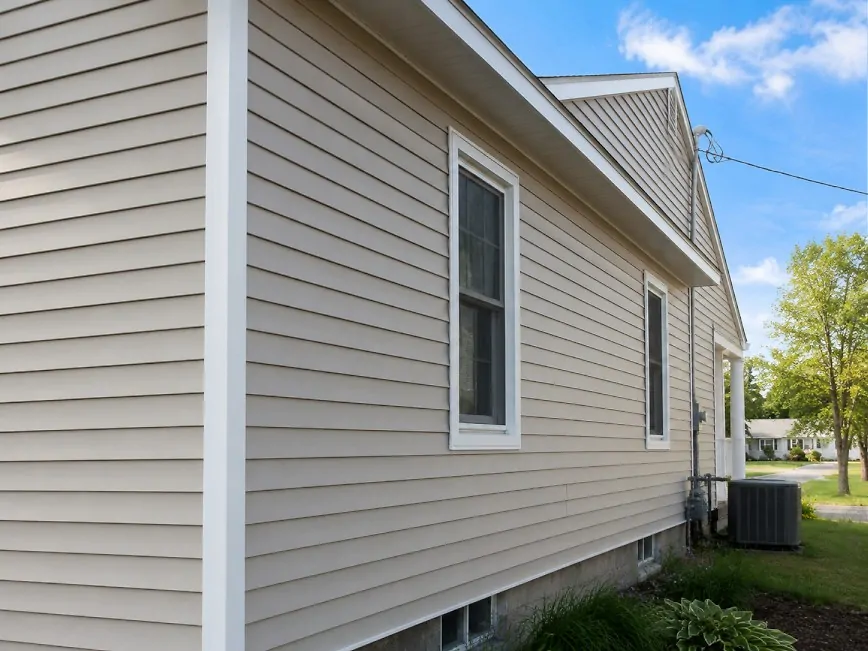
Another thing that struck me: Norwegians are a bit obsessed with maintenance. They paint, stain, and oil their houses on a regular basis. In the U.S., it’s more of a “set it and forget it” approach – vinyl or fiber cement siding that’s supposed to withstand everything without you lifting a finger. Vinyl is a type of plastic siding (PVC) that doesn’t handle cold weather particularly well, but it resembles Norwegian siding – with a smoother surface.
Both have their charm, but I must admit that a well-maintained Norwegian wooden house with the right colors has a soul that’s hard to beat.
After many years, I’ve stopped laughing at the fussy little details. I appreciate them. Because they’re the reason the houses stay beautiful through long, dark winters.
I still miss the American pace and scale sometimes—the ability to build an entire neighborhood in a few months. But now, as I stand here finishing up a Norwegian house, with proper ventilation, good insulation, and wood that can actually withstand Norwegian autumn weather, the pride speaks for itself.
Because we’re not just building houses. We’re building homes that will last.
Thank you for reading. Best regards from a carpenter who has seen both sides of the Atlantic.
Cross-Cultural, Life In Norway