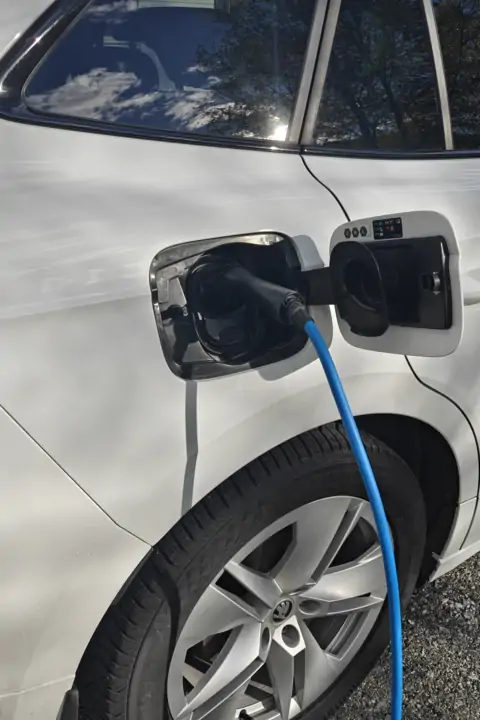
The Great Norwegian Electric Car Craze
While other countries argue over subsidies and struggle with charging infrastructure issues, we have made the electric car by far the most sensible – and popular – choice for the average person.
By 2025, the share of pure electric cars reached an astonishing 95.9 percent of new car sales. For several months, it hovered at 97–98 percent, and in December it shot all the way up to 97.6 percent. The fossil-fuel car has, in practice, become a niche product here at home. It’s completely surreal when you think about how fast it’s happened.
From 0 to 98 percent: How we phased out the fossil-fuel car
Just look at the rest of the world. In the EU, pure electric cars managed a paltry 17.4 percent in 2025. Denmark and Sweden are at the top of Europe with around 60–68 percent electrified sales at times, but they are miles behind us. China sells the most electric cars in absolute numbers, but the market share is at 50–60 percent. In the U.S., electric cars accounted for only about 7–8 percent of new car sales through 2025, and the figure dropped further toward the end of the year when federal subsidies were cut. Norway is simply in a league of its own.
This success doesn’t happen on its own. It’s due to a powerful package of incentives that have been in place for years: zero registration tax, low or deferred sales tax, free ferries, cheaper tolls, access to bus lanes, and favorable parking agreements. Together, these measures have made it simply worthwhile to buy an electric car – even for many people living far out in rural areas. Politicians dared to invest early and invest heavily, and the result is that no other country has come close.
Milestone
Today, Norway has surpassed one million electric cars on the roads- about one in three passenger cars is electric. This is a huge milestone that shows just how far the transition has gone. Many families have now replaced both their gasoline and diesel cars with electric cars, and range anxiety has become less of an issue thanks to better batteries and more charging infrastructure.
Consider these figures – they’re actually quite remarkable:
- Norway has already surpassed 1.1 million electric cars on the roads in 2026.
- About 1 in 3 passenger cars is now electric – in the Oslo area, the figure is closer to 45 percent.
- A market share of 95–98 percent means that fossil-fuel cars are almost impossible to sell as new vehicles anymore.
- CO2 emissions from passenger transport have fallen by over 30 percent since 2019, even though people are driving more than ever.
- At the same time, the government has saved enormous sums on gasoline and diesel imports – money that has instead gone to other items in the national budget.
This is no longer a transition. It is a revolution that has unfolded before our very eyes, almost before we had time to blink.
From a laughable toy to a national headache
But the success also has a dark side that few are willing to speak openly about. While we celebrate all the green cars, revenue from gasoline and diesel taxes is disappearing at breakneck speed. The government is missing out on billions that were supposed to fund roads and maintenance. The power grid is starting to feel the strain, and fast-charging queues during the holidays have become the new Norwegian national pastime. What started as a pure climate triumph is turning into a real financing nightmare for the welfare state.
The most fascinating thing, however, is just how completely attitudes have shifted. Just ten to fifteen years ago, electric cars were met with laughter and scorn – “an expensive toy for Oslo’s west side.” Today, it’s almost embarrassing to buy a new gas-powered car in many circles. The cultural revolution has been just as important as all the tax cuts. Norway has shown that it is actually possible to transform an entire nation’s vehicle fleet in just a few years when the will, the money, and the policies are in place.
Norway: A Pioneer
Internationally, many point to us as a pioneer. Delegations from Europe, Asia, and the U.S. come here to study what worked. Still, it’s worth asking: How much of this success is actually due to Norway’s unique economic measures, and how much has been financed by oil money? Without the government’s ability to provide massive tax breaks, the picture would have looked very different.
Now we stand at a crossroads: Can we maintain this momentum without penalizing those who still need to use fossil-fuel cars for work or in rural areas? Should we retain all the benefits when almost everyone drives an electric car, or perhaps we will soon have to start charging road tolls from them as well?
The success story is real and impressive – but it is far from over. The next chapter is about how we will pay for the roads when all of Norway drives on electricity.
It will likely be the transportation industry that takes the brunt of it.
Sources:- Norsk Elbilforening. Revidert nasjonalbudsjett 2025: Et signal om stabil elbilpolitikk i 2026
- European Alternative Fuels Observatory. (2026, 1. januar). Norway hits 98% EV share as Europe enters 2026 policy era
- ACEA. (2026, 27. januar). New car registrations: +1.8% in 2025; battery-electric 17.4% market share
- Reuters. (2026, 2. januar). Norway zips ahead in EV race as car sales hit 96% electric in 2025
- U.S. Energy Information Administration. (2026, 9. februar). Electric vehicle sales fell as hybrid vehicle sales continued to grow in 2025
- CnEVPost. Automakers’ share in China NEV market in 2025
Nor2050 Budget