From stave churches to Bryggen to sturdy stone buildings, there’s a lot to see.
After writing about how we build differently here at home than in the rest of the world, I thought it would be perfect to delve a little deeper into history. Because what really reflects Norwegian building traditions are our old structures. They’ve stood strong through the ages, weathering the elements for centuries—some almost a thousand years. These monuments don’t just tell a story about history; they’re a testament to the resilience and spirit of the Norwegian people.
We’re not just talking about nice-looking fronts. It’s all about clever woodworking, sturdy stone construction, and adapting to a climate that can be a bit unkind. Let’s take a look at some of Norway’s most iconic historic buildings. Naturally, with a tool belt on and a smile ready.
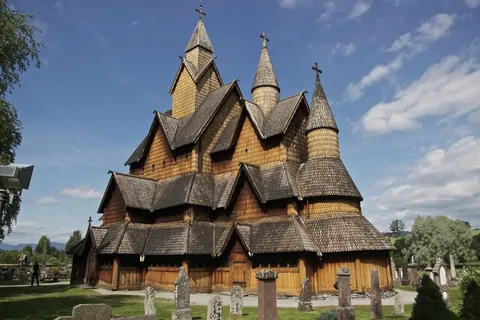
Stave churches are a real point of pride for Norway when it comes to woodwork.
If there’s one structure that shows just how skilled our ancestors were with wood, it’s the stave churches. It was built in the 12th and 13th centuries with a sturdy stave construction that supports the entire roof and walls. Most of them are gone now, but there were probably over 1,000 at one time. 28 remain, and they’re one of a kind.
I’m not totally sure if Lothepus’s in Odda counts.
- The Urnes Stave Church in Luster is the oldest, with parts dating back to around 1130. It’s a UNESCO World Heritage Site. The carved portals mix Viking designs with Christian symbols, which is basically what someone once said, “We take the best of both worlds.”
- Borgund Stave Church in Lærdal is probably the most photographed. It’s got dragon heads and a tall, slender shape that almost looks like it’s growing out of the mountains.
- Heddal Stave Church in Notodden is the largest one still standing, and it’s still an impressive sight.
These churches were built without any nails in the load-bearing structures (at least at first). It’s just timber framing, dowels, and smart construction techniques. They’ve withstood both the Black Death and several hundred years of West Coast weather.
I’ve been inside Borgund, and I’ve thought that if we were to build something similar today, the developer would have asked for a TEK17 report. The ancients clearly knew something we’ve forgotten.
Bryggen in Bergen is a good example of my “home turf.”
Since I work here in Bergen, I’ve got to mention Bryggen. This row of crooked, colorful wooden houses along Vågen isn’t just a pretty picture—it’s a living piece of Hanseatic history from the 14th century onward.
The houses are narrow and deep, with shops facing the street and storage spaces and living quarters further back. A lot of them have been rebuilt after fires (the big fire of 1702 left its mark), but the basic structure is old. Bryggen is on UNESCO’s list, and it’s easy to see why. You can see how trade, practical needs, and the constant rain have shaped the architectural style.
When I walk by, I always think, “This is the real deal, West Coast craftsmanship.” It’s a bit crooked and weathered, but it’s still standing.
Medieval stone buildings were a symbol of power for kings and the church.
While wood was the go-to in the countryside, the big players switched to stone when they wanted to show off their power:
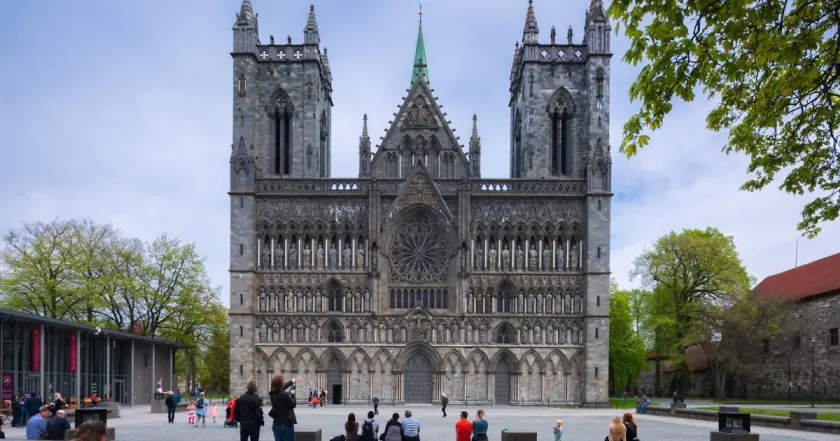
- Nidaros Cathedral in Trondheim, Norway’s national sanctuary, was started in the 12th century. Here, you can see the change from Romanesque to Gothic style. It’s a cathedral that could easily hold its own against the best in Europe.
- Håkonshallen and Rosenkrantz Tower in Bergen – King Håkon Håkonsson’s banquet hall from the 13th century and the mighty tower meant to keep the Hanseatic League in check. Håkonshallen is one of the largest intact medieval stone buildings in Norway.
- Akershus Fortress in Oslo – it started out as a medieval fortress and then became a Renaissance castle. It’s survived sieges and fires, and it still stands as a reminder that Norway has always had to defend itself.
These buildings show another side of Norwegian architectural tradition: When we had the resources and ambition, we could master stone and lime mortar just as well as wood.
Older wooden buildings that aren’t associated with any religion – they’re the unsung heroes.
It wasn’t all churches and castles. Some of the most fascinating buildings are the “ordinary” ones:
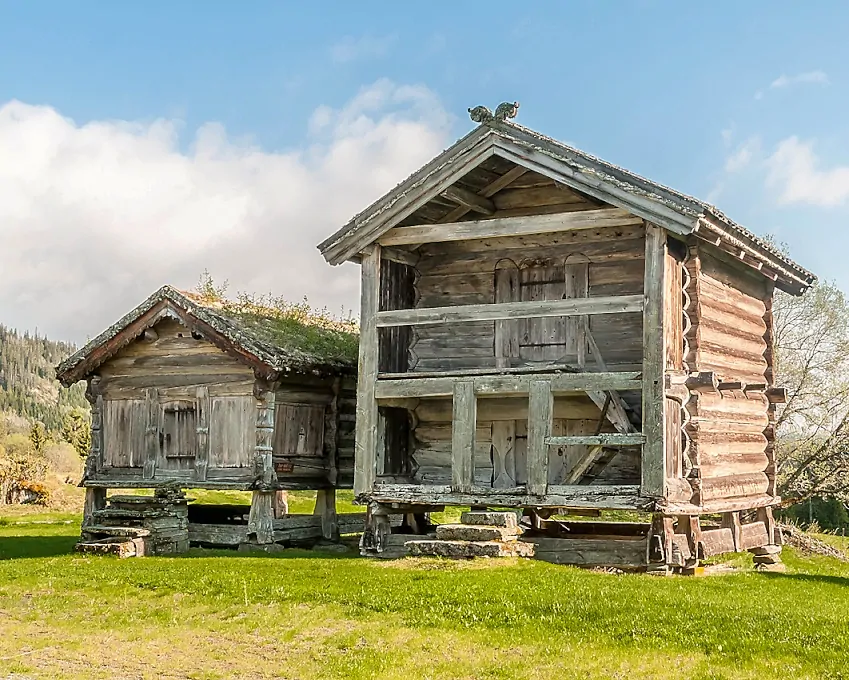
- Vindlausloftet (Stålekleivloftet) in Telemark is probably Norway’s oldest secular (non-ecclesiastical) wooden building. It was built around 1167–1184. A simple loft that’s still going strong. Think about it – it’s almost 860 years old, and it wasn’t even meant to be anything special.
- Raulandstua and other medieval barns and farmhouses from Numedal and Telemark. Some of them have been moved to the Norwegian Folk Museum, but a lot of them are still on the farms.
These show that regular people also built for eternity, using log-building techniques that have lasted for centuries.
Why should we who build today care about this?
When I visit a modern construction site with solid wood, CLT, or well-insulated wooden structures, I see connections to stave churches and the art of log construction. We haven’t reinvented the wheel—we’ve just made it a little rounder and more energy-efficient.
When you look at old buildings, you see that good construction is about understanding the materials, the climate, and what’s needed. Wood binds CO2, stone provides weight and warmth, and a well-built structure lasts a long time.
At the same time, they remind us not to build too quickly. Some of these buildings took decades to complete, and they’re still standing.
What’s your favorite historic Norwegian building? Have you ever visited a stave church that just left you speechless? Or maybe you’ve been working on restoring old wooden houses?
Make sure you build well and take a look around you every now and then. History is right there, waiting for us.
Timber-Stone
